How to Get to Romania
You can reach Romania by all possible means of transport: plane, train, coach and car. Below we outline the advantages and disadvantages of each option.
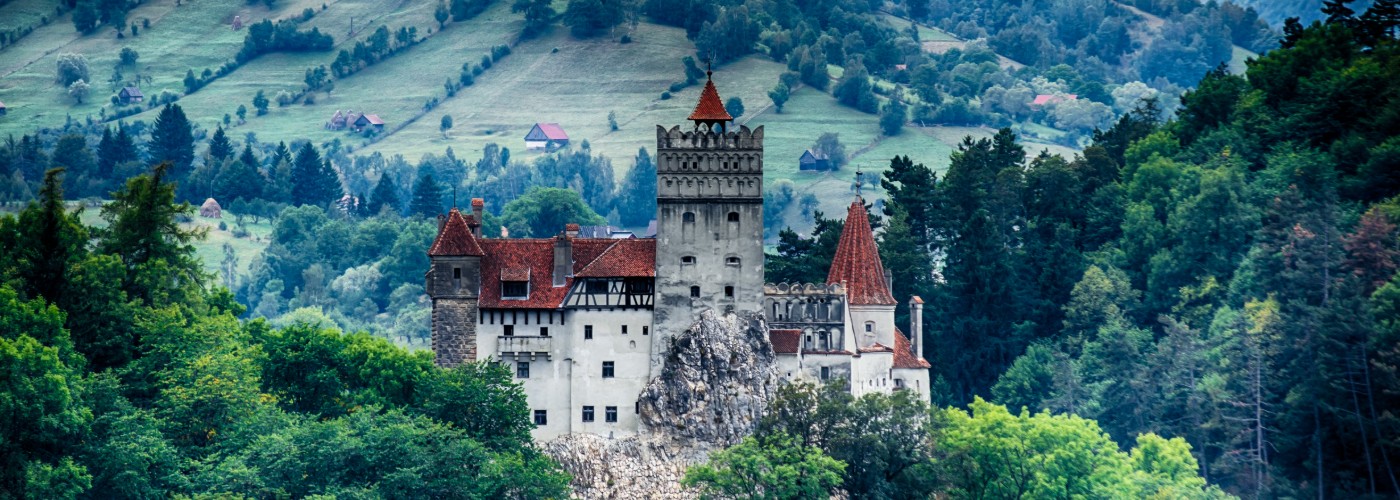
A country waiting to be discovered, with lush valleys, mountains dotted with magnificent castles, and historic regions such as Transylvania. This is Romania, an Eastern European country part of the Balkan Peninsula, stretching from Hungary in the west to the shores of the Black Sea in the east.
Those who decide to travel to this land, still practically unknown to mass tourism, will find a truly fascinating country, unique in many ways and full of remarkable places. From the vibrant capital Bucharest, which is becoming more Westernised every day, to the splendid towns of Brașov and Sighișoara, steeped in memories of a medieval past filled with castles (unmissable is Dracula’s Castle, but also those of Peleș and Corvin), customs and traditions.
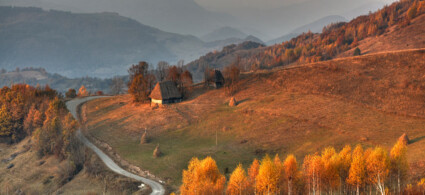
Special mention must be made of Romania’s landscapes, from the plains surrounding Bucharest to the Carpathian Mountains, where you’ll find fresh air, old-fashioned hospitality, splendid monasteries and villages where time seems to have stood still. Finally, don’t forget the Danube Delta, a UNESCO World Heritage site since 1991, where you can find unique flora and fauna found nowhere else on Earth.
Romania is definitely worth visiting, a country that has completely transformed itself after spending a century in turmoil, between coups, Soviet-style dictatorship, earthquakes and resulting poverty that lasted until just a few years ago. Today, in the 21st century, it’s experiencing a period of rapid transition, thanks also to its accession to NATO in 2004 and the EU in 2007.
Cities are developing at an astonishing pace, inhabitants are finally feeling similar to their European Union neighbours, their customs and ways are becoming increasingly like those of Western Europe. At the same time, tourism to Romania is in constant growth, thanks also to the enormous impact of budget airlines, which offer dozens of weekly flights from virtually every airport across Europe.
Romania is a country divided into numerous climate zones, from snow-capped mountains to plains, from beaches to the continental areas in the country’s interior. The climate in Romania varies considerably from north to south, and is generally milder along the Black Sea coast.
Generally speaking, Bucharest is a city you can visit 365 days a year, although of course winters are quite cold. To visit the rest of the country, the summer months are best, and the climate is never scorching even in August.
To get to Romania, flying is undoubtedly the best choice. There are numerous flights between Europe and Romania, almost all operated by budget airlines, departing from many airports across the continent. Flights don’t land only in Bucharest, but also in smaller airports such as Bacău, Cluj-Napoca, Craiova, Iași, Suceava and Timișoara. Prices are competitive if booked with adequate notice, and flight duration is around two hours.
Alternatively, there are also numerous buses operating connections to Romania, run by both large international companies such as FlixBus and Eurolines, and small independent operators. In this case, travel time varies depending on the destination, but to give you an idea, the journey from most European cities to Bucharest takes approximately 20 hours. Moreover, sometimes bus fares are higher than those for flights.
There are many attractions that visitors will find in Romania, from vibrant Bucharest to the pastoral landscapes of Bucovina, from medieval villages to resorts on the Black Sea coast. A thorough and comprehensive tour of the country could take months, but in any case here are the 5 things you shouldn’t miss during a trip to Romania.
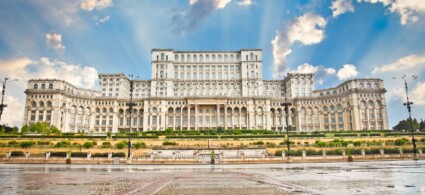
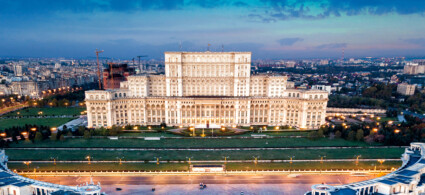
Bucharest is still seen by many as a dull and post-Soviet city, but the reality is that the dark centuries of dictatorship are over, and today the capital has been reborn and attracts visitors from all over Europe, largely thanks to the celebrated Bucharest thermal baths. The city’s iconic monument is the Palace of Parliament, or Palatul Parlamentului in Romanian, the world’s largest parliamentary building: an enormous edifice built to showcase the megalomania of dictator Ceaușescu.
The historic centre was largely razed by the 1977 earthquake and by ill-fated planning dating from the communist era, but here and there it’s still possible to admire palaces, buildings and squares that recall what was once the “Paris of the East“, the nickname Bucharest had before the Second World War.
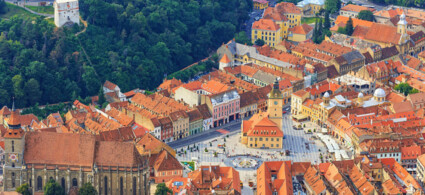
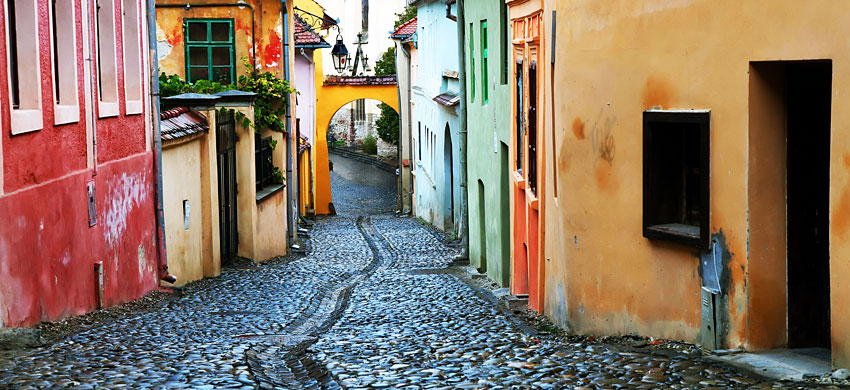
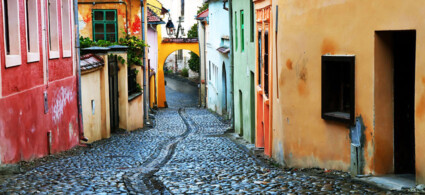
Brașov is the gateway to the historic region of Transylvania. A considerably quieter city than frenetic Bucharest, where you can breathe a romantic and relaxed atmosphere. Dating from the 13th century, Brașov takes visitors into its own world, a perfectly preserved medieval town that rightfully deserves to be in the top 5 most beautiful things to visit in Romania.
A tour of Brașov starts from Piața Sfatului, the central square overlooking a series of pastel-coloured buildings, and passes through the Black Church, or Biserica Neagră in Romanian, the largest Gothic church in Eastern Europe. Its name doesn’t come from its colour, which is actually bright yellow, but from its walls which, after a disastrous fire in 1689, darkened until they became black.
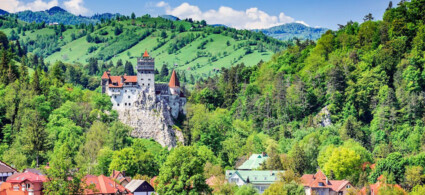
Romania is literally full of castles, some of world renown, others that will prove to be pleasant discoveries. The most famous and visited is undoubtedly Bran Castle, also known as Dracula’s Castle. It sits on the border between the regions of Transylvania and Wallachia, and according to legend (disputed by some) it was the home of the famous character created by Bram Stoker.
Also magnificent is Corvin Castle, dating from the mid-15th century and built in Gothic-Renaissance style: one of Europe’s largest castles and part of the list of Seven Wonders of Romania. Finally, it’s worth mentioning Peleș Castle, located near the city of Sinaia, in the heart of the Carpathians. Dating from the late 19th century, it was built in neo-Renaissance style in honour of King Carol I of Romania, who ruled the country until 1947, when the republic was proclaimed.
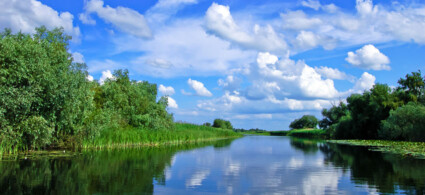
The Danube Delta is undoubtedly Romania’s most interesting natural attraction. It’s located on the northern border of the country, between Romania and Ukraine, and has been protected by UNESCO since 1991.
In the town of Tulcea, the Danube splits into three secondary rivers, called Chilia, Sulina and Sfântu Gheorghe, which form a huge area of over 4,000 square kilometres made up of small islands, marshes, sandbanks and unique ecosystems found nowhere else in the world, which have become home to 300 species of birds and 160 species of fish; here you’ll also find more than 1,200 plant species, some of which are endemic.
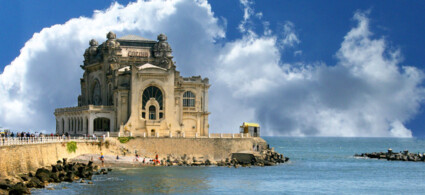
South of the Danube Delta lies Romania’s coastal region, facing the Black Sea. It’s the most visited area of the country during the summer months, when hundreds of thousands of holidaymakers arrive from Bucharest, from other towns in Romania and, recently, from other European countries.
The main city on the Romanian coast is Constanța, whilst further south, the beaches of Mangalia provide the backdrop for wild parties and nightclubs open until dawn.
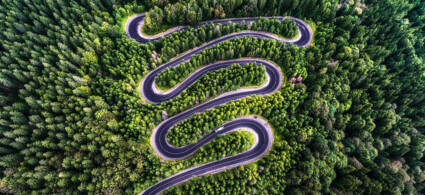
Once you’ve landed in Romania and spent a few days in Bucharest, why not set off on a road trip? It’s the best choice for visiting the country in its entirety, from the Carpathian mountains to the Black Sea coast, passing through enchanting villages inland. It’s possible to travel around the country completely independently, either by using local public transport, especially buses, or by hiring a car, a solution that guarantees maximum independence and freedom, with the advantage of being able to plan an itinerary tailored to your tastes and interests.
A 10-day Romania tour will give you an idea of the country and its main tourist destinations, whilst for a more complete picture a two-week itinerary is recommended, which alternates cultural visits to cities and natural attractions, concluding with a few days of relaxation by the sea.
Romania’s international dialling code is +40: to call a Romanian number from abroad, you need to dial 0040 before the number, without the 0 from the area code.
Romania observes Eastern European Time (EET, UTC+2) and is therefore one hour ahead of Western and Central European countries such as the UK, France, Germany and Spain, both during standard time and daylight saving time.
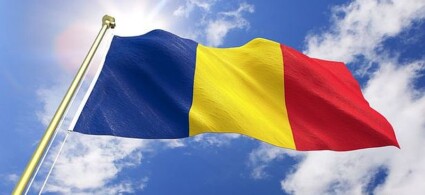
Romania’s national flag is a tricolour with vertical stripes; from left to right the colours are blue, yellow and red. Romania’s tricolour was first adopted in 1834 in Wallachia. According to some sources, blue represents freedom, yellow represents justice, whilst red represents the nation’s brotherhood.
Romania’s currency is the Romanian leu, officially abbreviated as RON. The exchange rate fluctuates between 4.9 and 5.0 lei per 1 euro, but the currency is fairly stable. The leu (lei in plural) is subdivided into 100 bani. Coins are issued in denominations of 1, 5, 10 and 50 bani, plus a 1 leu coin. Banknotes are issued in denominations of 5, 10, 50, 100, 200 and 500 lei.
Romania is part of the European Union, and geographically belongs to the Balkan Peninsula. It is bordered by the Black Sea to the east, whilst to the north it borders Ukraine and Moldova. To the south the Danube marks the border with Bulgaria, whilst to the west the long river separates it from Serbia. Finally, to the north-west it borders Hungary.
Romanian electrical outlets are compatible with those used in most European countries: Romania adopts the same European standard (types C and F), with voltage of 220-230V and frequency of 50Hz. European citizens will therefore not need adapters to recharge their electronic devices.
 Hotel
Hotel 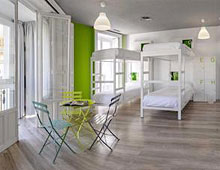 Budget accommodations
 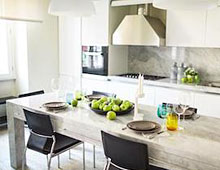 Apartments
  Family Hotel
 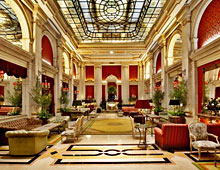 Luxury Hotel